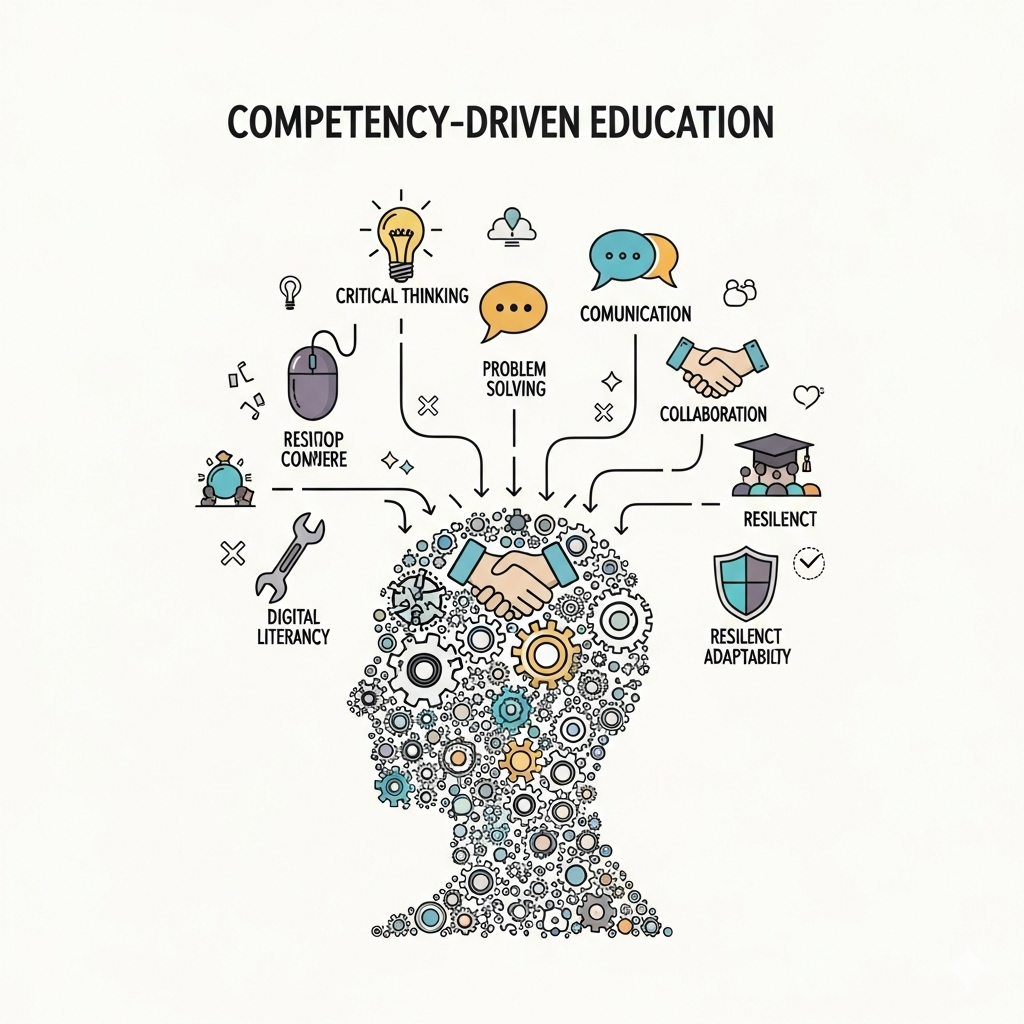
Competency-driven education is an approach that focuses on what students are able to do with what they learn, rather than measuring success solely by time spent in a classroom or credit hours earned. It emphasizes the demonstration of skills, knowledge, and abilities that align with professional expectations. In other words, it moves education beyond theory to verified practice.
For accredited programs, this model is especially valuable. Accreditation standards are often organized around defined competencies, and a competency-driven curriculum ensures accountability and consistency in meeting them. By clearly outlining the outcomes students must achieve—such as data management, project leadership, process improvement, or technology application—programs can demonstrate that graduates are prepared to meet workforce needs. This not only reassures employers of a graduate’s readiness but also reinforces the credibility of the academic program.
What makes competency-driven education particularly powerful is how mastery can be measured. Because we know which courses introduce each competency, and we know which assignments are designed to evaluate them, we can create dashboards that make student progress transparent. Imagine a program-level dashboard that displays all competencies to be developed during a student’s course of study. Students could log in at any time and see, in real time, how they are performing across competencies, where they have already demonstrated mastery, and where they will have additional opportunities to grow.
These dashboards could track performance on assignments, projects, simulations, and internship activities, aligning each with the relevant competencies. A student might see, for example, that they are excelling in data analysis but still developing their leadership competencies, along with a list of upcoming courses and assignments that will give them another chance to strengthen that area. This approach transforms assessment from a one-time judgment into a continuous feedback loop that empowers students to take ownership of their learning journey.
From an educator’s perspective, these same dashboards provide invaluable insight. By analyzing competency data across a cohort, faculty can identify students who may be struggling with specific skills and intervene earlier rather than later. For instance, if a student is consistently underperforming in competencies related to project management, faculty can provide targeted support, resources, or mentoring before the student reaches the internship stage. On a broader scale, programs can also use this data to assess whether certain competencies are being consistently met or if the curriculum should be adjusted to address gaps.
Internships play a critical role in extending this philosophy into the workplace. A high-quality internship should do more than track hours—it should track demonstrated competencies. Students could document specific tasks and projects, mapping them back to program outcomes, with preceptors verifying that the student demonstrated mastery in practice. These internship activities could then feed into the same dashboard, allowing students, faculty, and employers to see a holistic view of competency development across both classroom and real-world settings.
The value of competency-driven education lies in its clarity, accountability, and impact. Students gain confidence by seeing evidence of their growth and knowing exactly how their academic work translates into professional readiness. Universities ensure that learning experiences—whether in the classroom, online, or in the field—are measurable, structured, and meaningful. Employers benefit by hiring graduates who are not only knowledgeable but demonstrably capable of performing the tasks that matter most in the workplace.
In this way, competency-driven education creates a powerful alignment between students, universities, and the workforce. It ensures that learning is not abstract but practical, transparent, and directly tied to career success. By leveraging real-time data, dashboards, and intentional tracking of demonstrated competencies, we can transform the educational experience into one that is personalized, accountable, and truly prepares students to thrive in the professions they are entering.