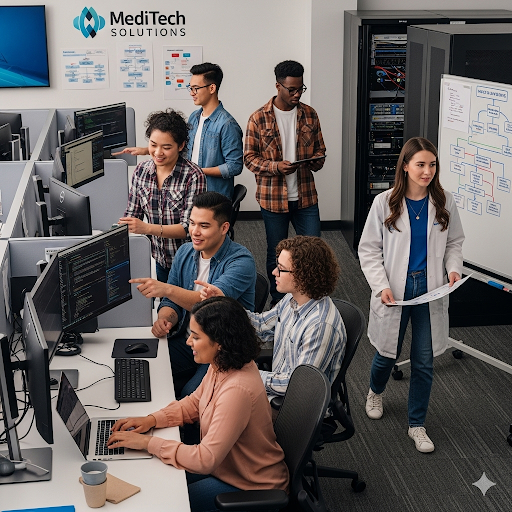
I’m often asked why internships are so important. Having served as Internship Director for the School of Global Health Management and Informatics at UCF for more than a decade, I’ve had the privilege of guiding hundreds of students through this process and working with a wide range of organizations that host our interns. My answer has remained consistent: internships are the essential bridge between academic learning and professional practice.
While the classroom provides the foundation, internships give students the chance to apply theory in real-world settings—an experience that cannot be fully replicated through lectures or textbooks. One of the most significant benefits is the opportunity for students to demonstrate the competencies they have developed in their coursework. Skills such as data analysis, project management, and process improvement take on new meaning when applied to real challenges in the workplace. This not only builds technical expertise but also helps students gain confidence in their ability to make meaningful contributions.
Internships also open doors to valuable networking. Working alongside professionals allows students to form connections that may lead to mentorship, references, or even employment opportunities. In many fields, those professional relationships are just as important as the knowledge gained in the classroom.
From the university perspective, internships are equally valuable. They provide a vital two-way exchange with the workforce, keeping us connected to current trends, projects, and technologies. Feedback from preceptors and supervisors helps us better understand emerging skill demands and adapt our curriculum to prepare the next generation of professionals. This collaboration ensures that our programs remain relevant and responsive to industry needs.
Finally, internships allow students to explore career paths in a practical way. Experiencing the day-to-day responsibilities of a role can confirm a chosen direction or inspire new interests. That clarity, combined with the confidence that comes from applying learned skills, makes graduates better prepared to enter the job market and make an immediate impact.
In short, internships are far more than a requirement to complete. They validate classroom learning, expand professional networks, inform curriculum development, and help students confidently transition into the workforce. For these reasons, internships remain one of the most powerful and transformative components of a student’s education.